Vintage Advertisements Are More Than Just Collectibles
·Revised
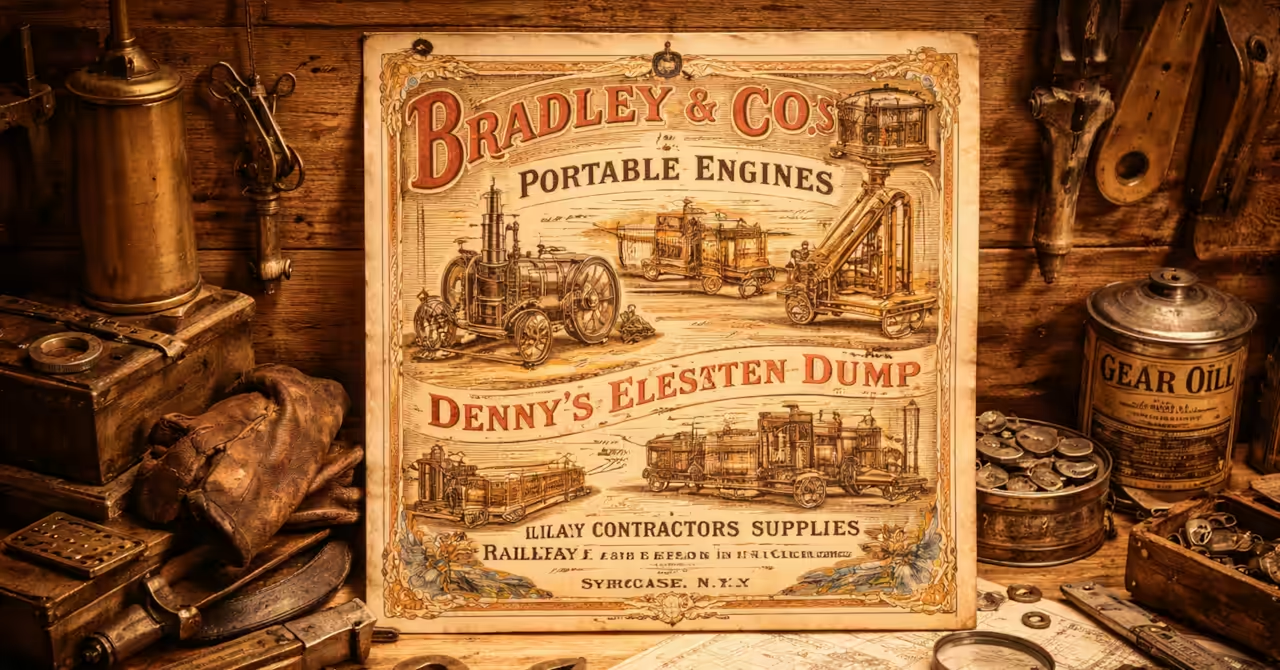
Decorative Pages Often Carry Working Knowledge
Vintage advertisements can be beautiful things. Their bold lettering, detailed illustrations, and decorative borders make them attractive to collectors. Some are framed and displayed as artworks. Others are preserved in albums, museums, and digital archives. Many have survived simply because somebody thought they were worth keeping.
Yet there is much more to an old advertisement than its appearance. Every advertisement was created for a purpose. It might have introduced a new invention, explained how a machine worked, or persuaded families to buy a particular product. Its words and pictures tell us what businesses wanted to sell and what they believed customers needed.
Consider an advertisement for a bicycle from the 1890s. Today, we might admire the elegant drawing of the bicycle and the old-fashioned lettering. But the original reader was interested in something more practical. Was the bicycle strong enough for local roads? Was it comfortable? Could it be trusted for everyday travel? The advertisement was trying to answer questions that mattered to a real customer.
This gives vintage advertisements two kinds of value. They are attractive objects worth collecting, but they are also historical records. They offer clues about technology, business, fashion, and daily life. To appreciate only their appearance is to overlook much of what makes them interesting.
What Can an Old Advertisement Tell Us?
Imagine finding an advertisement in a newspaper published more than 130 years ago. It shows a machine you have never seen before. The drawing is impressive, but the writing seems less exciting. There might be a list of materials, a manufacturer's address, or claims about the machine's strength and reliability.
Those details are worth reading. They can tell us what problems people were trying to solve, what technology was available, and how businesses competed for customers.
Advertisements can also reveal the limits of their time. If a company proudly announced that its product was easier to clean, this suggests cleaning was a concern for buyers. If another promised to save fuel, it suggests that running costs mattered. These claims do not prove the products worked as advertised, but they show what sellers believed would persuade customers.
Example 1: Dodge Split Pulleys and the Working Factory
In 1893, the Engineer and Inventor magazine carried an advertisement for Dodge wood split pulleys. At first glance, the advertisement might seem like a rather plain piece of industrial history. Why would anyone today be interested in a wooden pulley?
The answer becomes clearer when we consider how nineteenth-century factories operated. Before individual electric motors became common, many workshops used long rotating shafts to carry power from a central engine to different machines. Belts connected these shafts to equipment such as lathes, drills, and saws.
A pulley was an important part of this system. A split pulley could be assembled around an existing shaft, making installation and maintenance more convenient. This was a useful feature in a busy workshop, where taking machinery apart could interrupt production.
The advertisement therefore offers more than a picture of a product. It gives us an entry point into the technology of Victorian factories. It helps explain how machines received power, why practical design mattered, and how manufacturers supplied the growing industrial economy.
A collector might see an attractive example of nineteenth-century printing. An engineer might recognise a clever mechanical solution. A historian might see evidence of the systems that kept factories running. All three are looking at the same advertisement, but each discovers something different.
Example 2: Wanderer Cycles and the Changing Meaning of Travel
Another example comes from the Wanderer Cycle Company advertisement of 1893, preserved in Phillaneum's collection of Canadian engineering publications.
Today, an illustrated advertisement for a Victorian bicycle might appeal to anyone who enjoys vintage design. Its greatest historical interest, however, lies in the changes taking place around the bicycle itself.
During the late nineteenth century, bicycles were becoming a more practical means of transport. People could use them for recreation, exercise, and independent travel. Manufacturers had to persuade customers that their machines offered good value, reliable construction, and a comfortable riding experience.
The advertisement connects us with that growing market. It raises questions about the roads people travelled, the cost of owning a bicycle, and the freedom that personal transport could offer. The bicycle was more than a mechanical invention. It was becoming part of everyday life.
There is an important lesson here. An advertisement can tell us what a manufacturer wanted customers to believe. It cannot, by itself, prove how well the bicycle performed or how many people bought one. For those answers, we need other evidence, such as reviews, sales records, and newspaper reports.
That does not reduce the advertisement's value. It gives us a starting point for asking better questions about the past.
Example 3: T. W. Ness Telephones and a Connected World
The 1893 advertisement for T. W. Ness telephones, associated with Montreal, offers another way of reading commercial history.
Today, we rarely think about the remarkable technology behind a telephone call. We simply expect to speak with somebody far away. In the 1890s, however, telephone systems were still expanding, and businesses were learning how electrical communication could improve their work.
An advertisement for telephone equipment places us inside that changing world. It reminds us that communication required physical devices, wiring, skilled installation, and companies able to supply the equipment. The telephone was not simply a clever invention. It belonged to a larger network of manufacturers, service providers, businesses, and customers.
For a modern collector, the advertisement may be a charming reminder of early electrical technology. For a researcher, it is evidence of an industry developing around faster communication.
It also invites an interesting question: what did businesses consider important enough to advertise when the telephone was still a relatively new technology?
Why the Words Matter as Much as the Pictures
The three examples show why advertisements deserve to be read rather than simply admired. Their illustrations attract attention, but their written claims often reveal what mattered most to customers.
A manufacturer might advertise strength, safety, comfort, speed, or lower running costs. These words were chosen carefully. They presented a product as the answer to a problem or as a way to improve daily life.
Even small details can be useful. An address may identify where a business operated. A patent number can lead to records explaining an invention. A price can help researchers compare the cost of products. A drawing may reveal how an object was designed or intended to be used.
Of course, advertising is not an entirely reliable account of the past. Businesses sometimes exaggerated their products' benefits, ignored their weaknesses, or made promises they could not keep. That is why an advertisement should be treated as evidence of what a company claimed, not automatic proof that the claim was true.
Comparing several advertisements can help us see the larger picture. If many businesses promoted similar features, those features may have been important in the market. Changes in advertising language can also show how public expectations developed over time.
Beauty and Historical Value Belong Together
There is no need to choose between admiring an advertisement and studying it. Its artistic design was often part of its original purpose.
Victorian advertisers understood the importance of attracting attention. Decorative lettering, carefully arranged illustrations, and impressive borders helped a product stand out on a crowded page. A beautifully illustrated advertisement could suggest that a company was established, skilled, or trustworthy.
Advertisements for furniture, clothing, household goods, and decorative objects often used beauty to strengthen their message. Industrial advertisements could do something similar, using precise drawings to suggest sound engineering and professional workmanship.
This means an advertisement's design is itself historical evidence. It shows how businesses tried to influence buyers and what styles they believed would appeal to their customers.
Collectors have played an important part in preserving this history. Without people who valued the appearance of old advertisements, many examples might have been thrown away. Their beauty helped them survive, allowing later generations to discover the information they contain.
Learning to Read Beyond the Frame
The next time you encounter a vintage advertisement, try looking beyond its decorative features. Imagine yourself as the original reader. What was being offered? Why might you have wanted it? What problem did the product promise to solve?
Then look for details that might help answer those questions. A manufacturer's name, a drawing of a mechanical part, or a claim about improved performance can all lead to new discoveries.
This is one reason Phillaneum preserves and examines old advertising. Our Vintage Advertising Journal connects historic advertisements with the wider stories of technology, industry, commerce, and culture. Each surviving example can become a doorway into a part of history that might otherwise be forgotten.
An advertisement for a pulley can lead us into the Victorian factory. A bicycle advertisement can reveal changing ideas about travel and independence. An advertisement for telephone equipment can introduce the growing networks that transformed communication.
These are not merely decorative pages. They are fragments of a world in which people were inventing, manufacturing, buying, selling, and adapting to change.
Vintage advertisements deserve their place in collections, but their value does not end when they are placed behind glass. They still have stories to tell, questions to raise, and knowledge to share. The best way to appreciate them is not only to preserve what they looked like, but to discover what they meant.
From the Curator's Workshop
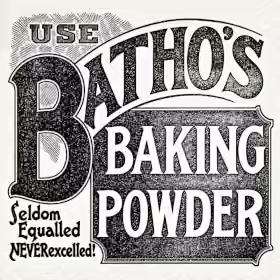
From Batho's bold newspaper lettering to the intricate illustrations of Victorian machinery, the past knew how to make the ordinary extraordinary. Phillaneum's Cabinet of Curious Vintage Mechanisms T-shirt celebrates that same exuberant spirit of invention and design, bringing a little nineteenth-century ingenuity into the modern wardrobe.

Author's Notes
Notes & Memoranda
Frequently asked questions
Curious about something you’ve just read? These frequently asked questions explore some of the key ideas, details and questions surrounding the topic.
Why are vintage advertisements valuable beyond their visual appeal?
They are historical records that reveal what businesses tried to sell and what customers cared about, offering clues about technology, industry, fashion, and daily life in their time.
What kinds of details in an old advertisement are most useful to researchers?
Details such as a manufacturer's name or address, patent numbers, prices, claims about strength, safety or running costs, and technical drawings can point to where a product was made, how it was supposed to work, and what buyers valued.
What do the examples of the Dodge pulley, Wanderer bicycle, and T. W. Ness telephone demonstrate?
The Dodge pulley illustrates how Victorian factories transmitted power and the practical benefit of split pulleys for maintenance; the Wanderer bicycle shows bicycles becoming practical personal transport and the market concerns of comfort, cost, and roads; and the Ness telephone ad highlights the emerging telephone industry with its need for devices, wiring, installation, and suppliers.
How should someone 'read beyond the frame' when examining a vintage advertisement?
Imagine yourself as the original reader and ask what was being offered and what problem it promised to solve, then study names, drawings, claims and other small details to uncover technical, commercial, and social context.
Further Reading…

Disclosure
This article offers an editorial interpretation of vintage advertisements as historical evidence of technology, commerce, and everyday life. The examples discussed are drawn from original advertisements preserved in the Phillaneum collection, with links to the relevant exhibits for further exploration. Historical advertising claims are examined in context and should not be taken as independent proof of a product's performance or reliability.